Table of Contents
- Key Takeaways
- The Growing Importance of Sustainability in Cold Chain Logistics
- How Electric Refrigerated Trucks Work
- Environmental Benefits of Electric Refrigerated Trucks
- Operational Advantages Beyond Sustainability
- Comparing Electric vs Traditional Refrigerated Transport
- The Role of Carrier Refrigeration Units in Electric Systems
- Industry Applications of Electric Refrigerated Trucks
- Challenges to Consider When Transitioning
- Practical Strategies for Adopting Electric Refrigerated Trucks
- Electric Refrigerated Truck Solutions for Sustainable Cold Chain Operations
- Frequently Asked Questions
As sustainability becomes a priority across logistics and supply chain industries, businesses are re-evaluating how they manage temperature-sensitive transport. The rise of the electric refrigerated truck is transforming cold chain operations by reducing emissions, improving efficiency, and supporting long-term environmental goals. Whether you currently operate a refrigerated lorry, rely on refrigerated truck rental, or manage specialised fleets such as an ice cream truck, transitioning to electric solutions offers both environmental and operational advantages.
At Alpha Refrigeration, we work across diesel, hybrid, and battery-electric refrigeration platforms from Carrier Transicold, Daikin, and Kingtec. The carrier refrigeration units most widely deployed by Singapore operators today are diesel-driven, but the broader electric range is opening up new options for operators planning their next fleet refresh.
Key Takeaways
- Electric refrigerated trucks significantly reduce carbon emissions compared to traditional diesel-powered refrigerated lorry systems.
- Advanced carrier refrigeration units enhance energy efficiency while maintaining precise temperature control.
- Lower fuel and maintenance costs make electric systems more cost-effective over time despite higher upfront investment.
- Electric fleets support compliance with sustainability regulations and environmental targets in modern logistics.
- Businesses using refrigerated truck rental can gradually transition to electric solutions without immediate full fleet replacement.
The Growing Importance of Sustainability in Cold Chain Logistics
Cold chain logistics underpins three of Singapore’s largest sectors: food, pharmaceuticals, and retail. The trade-off has historically been carbon. A diesel-powered refrigeration unit running 8 to 12 hours a day produces substantial emissions on top of the truck’s own engine output, doubling the carbon impact of every delivery.
An electric refrigerated truck offers a cleaner alternative by eliminating tailpipe emissions and reducing reliance on fossil fuels. The shift is particularly relevant in Singapore, where Singapore Green Plan 2030 and the LTA EV roadmap are pushing operators toward cleaner-energy vehicles. The plan targets 100% cleaner-energy vehicles in the national fleet by 2040, with commercial vehicle electrification milestones running through 2030.
Sustainability has also become a procurement filter. Multinational customers in food retail, pharmaceuticals, and FMCG distribution increasingly require their logistics partners to report Scope 3 emissions. An electric refrigerated truck moves a substantial portion of those numbers in the right direction.
How Electric Refrigerated Trucks Work
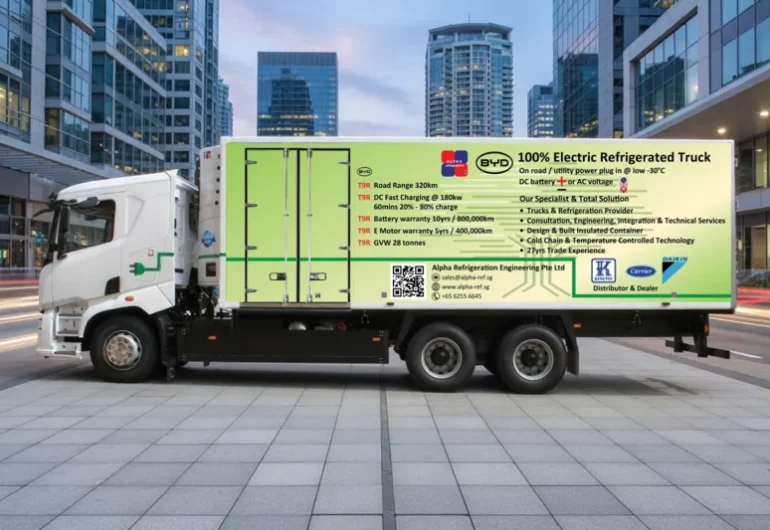
Electric refrigerated trucks combine battery-powered vehicle systems with advanced refrigeration technology to maintain temperature-controlled environments.
Battery-Powered Drive Systems
Unlike conventional vehicles, an electric refrigerated truck uses rechargeable batteries instead of diesel engines. This significantly reduces emissions and noise pollution.
Integrated Refrigeration Technology
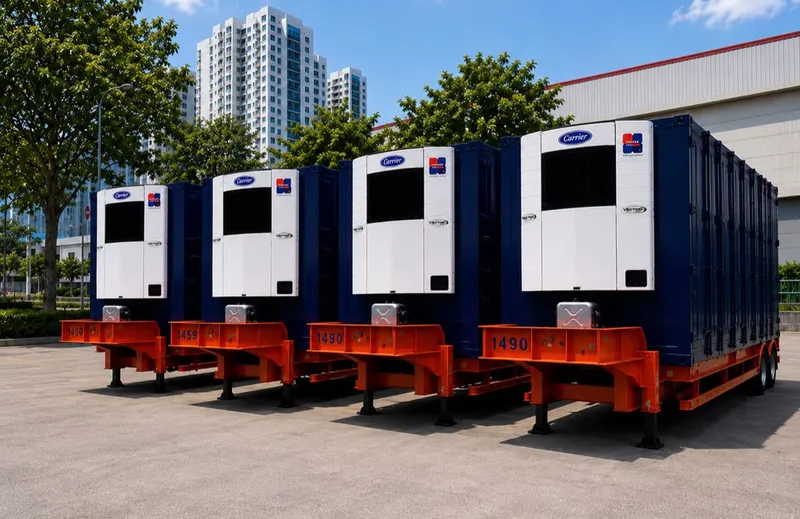
Modern refrigeration platforms now include dedicated electric variants. The Carrier Pulsor eCool for light commercial vehicles and the Carrier Vector eCool for trailers both use edrive technology to power refrigeration entirely from battery or kinetic recovery, removing the need for an auxiliary diesel engine.
Smart Energy Management
Electric systems often include intelligent controls that optimise power usage, ensuring that both vehicle propulsion and refrigeration operate efficiently without draining battery life unnecessarily.
Environmental Benefits of Electric Refrigerated Trucks
Switching to an electric refrigerated truck delivers measurable environmental benefits.
Reduced Carbon Emissions
Traditional refrigerated lorry systems rely on diesel engines that emit carbon dioxide and other pollutants. Electric trucks eliminate these emissions at the source, contributing to cleaner air and reduced environmental impact.
Lower Noise Pollution
Carrier’s Vector eCool meets PIEK certification, which specifies a maximum noise level of 60 dB(A) at 7.5 metres. The practical effect for Singapore operators is the ability to deliver to residential estates, hotels, and hospitals during overnight or early-morning windows that diesel units cannot legally service.
Improved Energy Efficiency
Electric systems convert energy more efficiently than internal combustion engines. This means less wasted energy and more effective use of power across the cold chain.
Operational Advantages Beyond Sustainability
While environmental benefits are significant, electric refrigerated trucks also offer practical advantages for businesses.
Lower Operating Costs
Although the upfront investment may be higher, electric systems reduce:
- Fuel expenses
- Engine maintenance costs
- Downtime due to mechanical issues
Enhanced Reliability
Electric drivetrains and edrive refrigeration units have fewer moving parts than their diesel equivalents, which lowers the breakdown rate across a fleet. For temperature-sensitive cargo, every roadside delay risks a temperature excursion that may make the entire load unsaleable.
Flexible Fleet Integration
Businesses can adopt electric solutions gradually. For example, using refrigerated truck rental options allows companies to test electric vehicles before committing to full fleet upgrades.
Comparing Electric vs Traditional Refrigerated Transport
Understanding the differences between electric and diesel-powered systems helps businesses make informed decisions.
| Feature | Electric Refrigerated Truck | Traditional Refrigerated Lorry |
|---|---|---|
| Emissions | Zero tailpipe emissions | High carbon emissions |
| Energy Source | Electricity | Diesel |
| Noise Level | Low | High |
| Maintenance Requirements | Lower | Higher |
| Operating Costs | Lower over time | Higher due to fuel and upkeep |
| Sustainability Impact | Environmentally friendly | Environmentally intensive |
The trade-offs are clear on paper, though the right choice for any operator depends on route length, daily operating hours, charging access, and cargo type.
The Role of Carrier Refrigeration Units in Electric Systems
Efficient refrigeration is at the core of any cold chain operation. Carrier refrigeration units are widely recognised for their reliability and performance.
Energy Efficiency Optimisation
These systems are designed to maximise cooling output while minimising energy consumption, making them ideal for electric applications.
Consistent Temperature Control
Maintaining precise temperatures is critical for sensitive goods. Advanced refrigeration units ensure stability across varying external conditions.
Compatibility with Electric Platforms
Modern carrier refrigeration units are engineered to integrate seamlessly with electric refrigerated trucks, ensuring optimal performance without compromising battery efficiency.
Industry Applications of Electric Refrigerated Trucks
Different sectors benefit from adopting electric refrigerated transport solutions.
Food and Beverage Industry
From fresh produce to frozen goods, maintaining quality is essential. Electric trucks ensure consistent temperature control while supporting sustainability goals.
Ice Cream and Frozen Goods Distribution
An ice cream truck running an electric setup can hold the -25°C to -35°C deep-freeze conditions required for ice cream and frozen seafood, while delivering into residential estates during quiet hours without breaching neighbourhood noise limits.
Pharmaceutical and Healthcare Logistics
Temperature-sensitive medical products require precise conditions. Electric refrigerated trucks provide reliable cooling with reduced environmental impact.
Retail and Last-Mile Delivery
Urban deliveries benefit from low-emission and low-noise vehicles, making electric refrigerated trucks ideal for city-based logistics.
Challenges to Consider When Transitioning
While the benefits are clear, businesses should also consider potential challenges.
- Initial Investment Costs: Electric refrigerated trucks typically have higher upfront costs compared to traditional systems.
- Charging Infrastructure: Access to reliable charging stations is essential for efficient operations, particularly for long-haul transport.
- Range Limitations: Battery range may vary depending on load, route, and refrigeration demands. Proper planning is required to optimise performance.
Practical Strategies for Adopting Electric Refrigerated Trucks
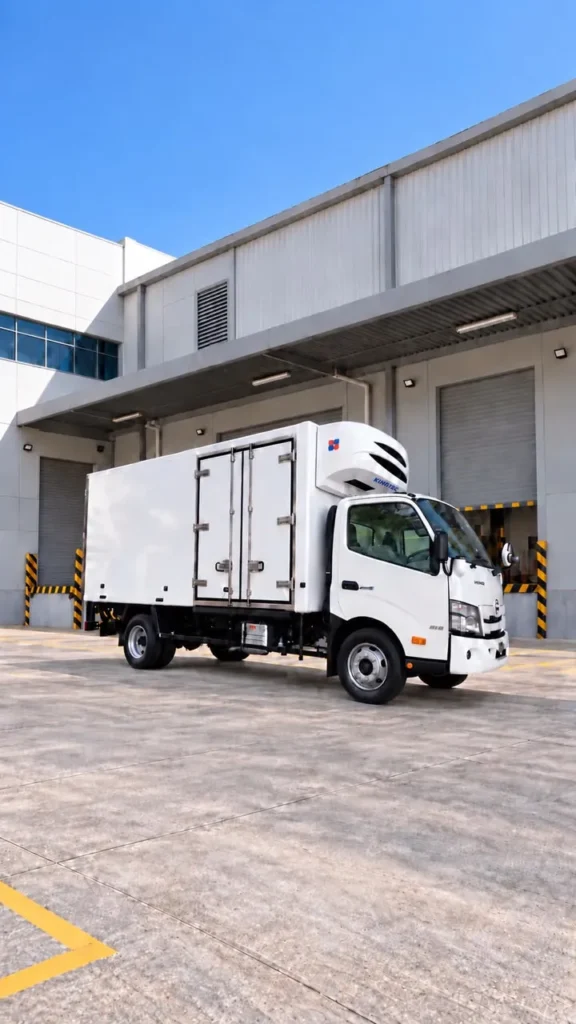
Transitioning to electric systems does not have to happen all at once. Businesses can take a phased approach.
- Start with refrigerated truck rental to test performance in real-world conditions
- Gradually replace older refrigerated lorry units with electric alternatives
- Invest in energy-efficient refrigeration systems such as carrier refrigeration units
- Optimise delivery routes to maximise battery efficiency
- Train staff on operating and maintaining electric vehicles
This approach allows businesses to balance cost, performance, and sustainability goals.
Electric Refrigerated Truck Solutions for Sustainable Cold Chain Operations
The adoption of an electric refrigerated truck is no longer just an environmental choice. It is a strategic decision that improves efficiency, reduces costs, and future-proofs your cold chain operations. From integrating advanced carrier refrigeration units to exploring flexible options like refrigerated truck rental, businesses can transition at their own pace while maintaining high performance standards.
At Alpha Refrigeration, we work with operators planning the diesel-to-electric transition across food logistics, pharma, and distribution. The right starting point depends on your current fleet age, route profile, and capital plan. Speak to Alpha Refrigeration about the electric and hybrid refrigeration options, alongside rental arrangements that can bridge your fleet without disrupting daily operations.
Frequently Asked Questions
How long does an electric refrigerated truck battery last during operations?
Battery range varies with load weight, route distance, ambient temperature, and refrigeration setpoint. Most modern light commercial electric refrigerated trucks deliver 200 to 300 km of real-world urban range on a single charge, which covers a full daily delivery cycle for most Singapore multi-drop operations. Heavier trucks and trailer units have shorter ranges and may require depot top-up charging mid-day.
Can electric refrigerated trucks handle long-distance transport?
Yes, but route planning and charging infrastructure are important. Many businesses use them effectively for regional and urban deliveries.
Are electric refrigerated trucks suitable for small businesses?
Yes. Lower per-trip energy costs and reduced servicing make electric refrigerated trucks particularly suitable for small businesses with predictable urban routes. Most operators start with refrigerated truck rental to test performance and route fit before committing capital to a purchase.
Do electric trucks affect cooling performance?
No. With advanced systems like carrier refrigeration units, cooling performance remains consistent and reliable.
How do electric refrigerated trucks perform in hot climates?
They are designed to operate efficiently even in warm environments, provided the refrigeration system and insulation are properly configured.