Table of Contents
- Key Takeaways
- Why Truck Body Design Is Critical for Temperature Control
- Key Design Elements That Affect Temperature Control
- Airflow Management Inside the Truck Body
- Comparing Standard vs Advanced Refrigeration Truck Bodies
- Energy Efficiency and Cost Implications
- Preventive Care Tips to Extend Truck Body Lifespan
- Choosing the Right Refrigeration Truck Body for Your Needs
- Common Mistakes to Avoid
- Refrigeration Truck Body Solutions for Reliable Cold Chain Performance
- Frequently Asked Questions
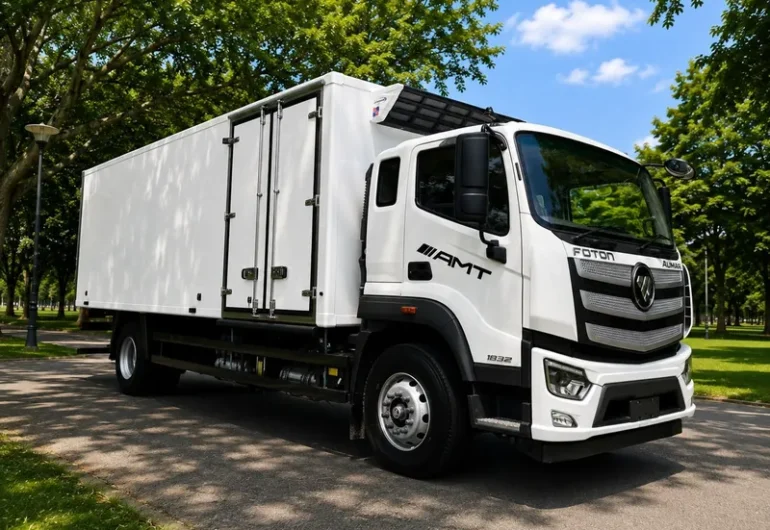
Most cold chain decisions focus on the refrigeration unit. The truck body itself often gets less attention, which is a problem, because the body is the thermal envelope the refrigeration unit has to work within. Insulation, airflow paths, and structural integrity each shape how well an internal temperature setpoint actually holds across a day’s route.
Operators evaluating a refrigerated truck for sale or running an existing reefer truck in Singapore can save meaningful energy and reduce product loss by paying as much attention to the box as to the unit on top of it. At Alpha Refrigeration, we see the difference daily: in Singapore’s heat and humidity, a well-built body often does more for temperature stability than a higher-capacity refrigeration unit fitted to a poorly insulated one.
Key Takeaways
- A well-designed refrigeration truck body minimises heat transfer, improving temperature stability during transport.
- High-quality insulation is essential for maintaining efficiency in refrigerated truck in Singapore operations.
- Proper airflow design ensures even cooling and prevents temperature inconsistencies.
- Door sealing and structural integrity play a major role in reducing cold air loss.
- Investing in the right truck body design improves energy efficiency and extends equipment lifespan.
Why Truck Body Design Is Critical for Temperature Control
Temperature control is not solely dependent on the refrigeration unit. Even the most advanced system cannot compensate for poor insulation or inefficient body design.
Singapore’s climate (28°C to 32°C ambient year-round, 70 to 90% relative humidity) works against the truck body every operating hour. External heat penetrates weak panels, pushing the refrigeration unit to compensate. Energy consumption rises, cooling becomes uneven, and the operator running a cold truck in Singapore ends up paying twice: once in fuel or electricity, and again in product spoilage when temperature-sensitive food or pharmaceutical loads drift out of range.
A properly built refrigeration truck body holds internal conditions stable, letting the refrigeration unit operate at moderate load rather than running flat-out to compensate for heat gain through the walls.
Key Design Elements That Affect Temperature Control
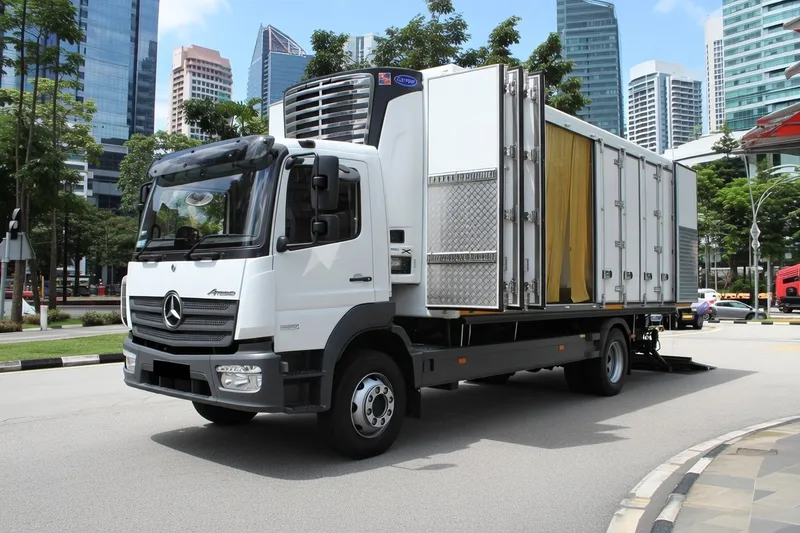
Understanding the core components of a refrigeration truck body helps businesses make informed decisions when selecting or upgrading vehicles.
Insulation Materials and Thickness
Insulation is the foundation of temperature control. High-quality materials reduce heat transfer and maintain stable internal conditions.
Common insulation features include:
- Polyurethane (PU) foam core, typically 40 to 60 kg/m³ density, with closed-cell rate above 90% for low thermal conductivity (around 0.022 W/m·K)
- Core thickness of 50 to 75 mm for chilled applications, 80 to 150 mm for freezer applications
- FRP (fibre-reinforced plastic) or GRP outer skins for impact resistance and moisture protection in humid climates
- Stainless steel hardware on door frames and lock assemblies to resist corrosion
For anyone searching for a refrigerated truck for sale, insulation quality should be prioritised over cost savings.
Structural Design and Build Quality
The physical structure of the truck body determines how well it retains cold air and withstands operational stress.
Important considerations include:
- Sandwich-panel construction with FRP/GRP skins bonded to PU foam core, jointed without thermal bridges
- Reinforced corner extrusions and floor rails that handle pallet jack loads without flexing
- Smooth, FDA-grade interior linings that allow proper hose-down cleaning between loads
A durable reefer truck in Singapore must maintain its structural integrity despite frequent loading and unloading.
Door Systems and Sealing Efficiency
Doors are one of the most vulnerable points for temperature loss.
Effective designs include:
- Dual-layer EPDM rubber gaskets that retain elasticity in 30°C ambient and 4°C internal conditions
- Insulated rear doors with the same PU foam core thickness as the side panels
- Strip curtains across the rear opening to reduce cold-air dump during multi-drop deliveries
- Door-ajar sensors linked to driver alerts, since unclosed doors are the single most common cause of temperature excursions
For high-frequency delivery operations using a refrigerated truck in Singapore, efficient door systems are essential to maintain consistent temperatures.
Airflow Management Inside the Truck Body
Temperature consistency depends not only on cooling power but also on how air circulates within the cargo area.
Even Air Distribution
Proper airflow delivers consistent cooling across every pallet in the cargo area. Poor circulation creates hot spots, particularly at the rear and the centre of densely packed loads, which can put product on the wrong side of SS 668:2020 temperature limits even when the dashboard reads correctly.
Ventilation Design
Ceiling-mounted ducting and properly positioned return-air vents push cold air the full length of the cargo area before drawing it back through the evaporator. The arrangement reduces strain on the refrigeration unit and keeps temperature variation within a few degrees end-to-end.
Load Arrangement
Cargo placement affects airflow as much as the body design itself. Overloading the cargo area, blocking ceiling vents, or stacking pallets against side walls disrupts circulation. The best-built cold truck in Singapore cannot hold temperature if the load plan ignores air paths.
Comparing Standard vs Advanced Refrigeration Truck Bodies
Different truck body designs offer varying levels of performance and efficiency.
| Feature | Standard Truck Body | Advanced Insulated Body |
|---|---|---|
| Insulation Quality | Basic | High-density polyurethane |
| Temperature Stability | Moderate | High |
| Energy Efficiency | Lower | Higher |
| Durability | Standard | Reinforced |
| Suitable Use | Light-duty transport | High-demand cold chain operations |
The upfront price gap between a standard and an advanced insulated body usually pays back within two to three years on energy savings alone, before counting reduced product loss.
Energy Efficiency and Cost Implications
A well-designed truck body reduces the workload on the refrigeration system, leading to significant cost savings.
Reduced Cooling Demand
Better insulation minimises heat entry, allowing the system to maintain temperature with less effort.
Lower Operating Costs
Lower energy draw per trip compounds across a fleet. A 20 to 30% efficiency improvement on a single truck becomes meaningful operating-cost relief on a fleet of 10 or 20.
Longer Equipment Lifespan
A refrigeration unit running at moderate load wears more slowly than one running flat-out to compensate for heat gain. Lower duty cycles translate to longer compressor life, fewer service interventions, and lower lifetime maintenance spend.
Preventive Care Tips to Extend Truck Body Lifespan
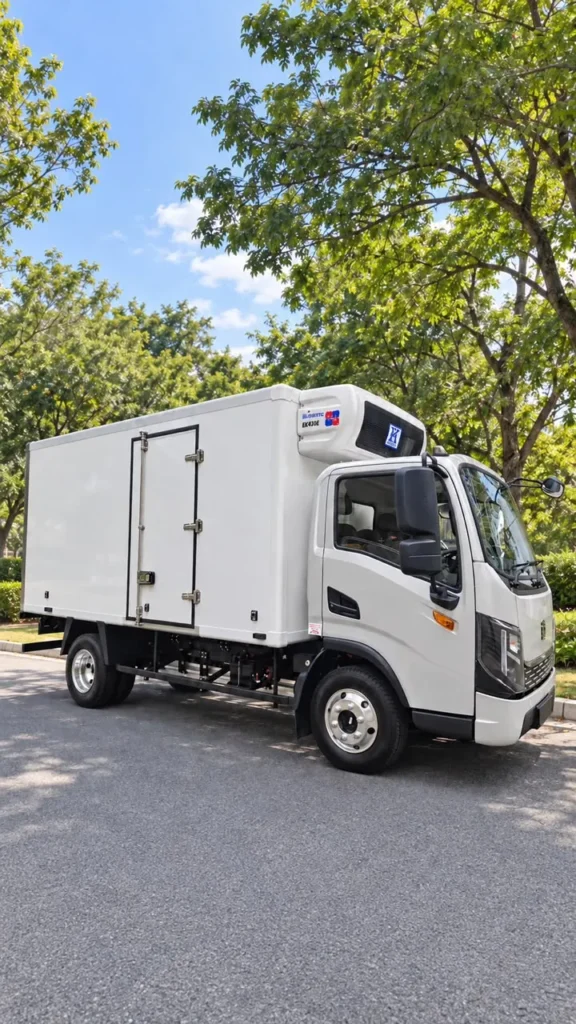
Maintaining your refrigeration truck body is essential for consistent performance and long-term durability.
Regular Inspection of Insulation
Check for signs of wear, moisture damage, or reduced effectiveness. Early detection prevents costly repairs.
Door Seal Maintenance
Inspect door gaskets monthly for hardening, cracking, or compression set. A torn or stiffened seal can leak enough cold air to push internal temperature out of range on every door opening.
Cleaning and Hygiene Practices
Keep interior surfaces clean to prevent contamination and maintain airflow efficiency.
Structural Checks
Inspect panels and joints for cracks or damage that could compromise insulation performance.
Choosing the Right Refrigeration Truck Body for Your Needs
Selecting the right refrigeration truck body depends on how your operations are structured, including the type of goods transported, delivery patterns, and long-term cost considerations. These factors influence not only temperature control but also overall efficiency and reliability.
Type of Cargo
The type of cargo determines the level of insulation and temperature precision required. Frozen goods typically require thicker insulation to maintain sub-zero conditions, while chilled products may need more consistent but less extreme temperature control. Businesses handling mixed loads may also need compartmentalised designs to maintain different temperature zones within the same vehicle.
Delivery Frequency
Frequent stops can lead to repeated temperature fluctuations, especially when doors are opened often. In these cases, truck bodies with efficient sealing systems and faster temperature recovery are more suitable. Operators using a reefer truck in Singapore for last-mile delivery should specify strip curtains, fast-closing rear doors, and accurate door-ajar telemetry. Each unnecessary minute of door-open time is a measurable hit on cargo integrity.
Long-Term Investment
When evaluating a refrigerated truck for sale, it is important to look beyond the initial cost and consider durability, insulation performance, and maintenance requirements. A higher-quality truck body may have a higher upfront cost but can reduce energy consumption and repair needs over time, particularly for businesses operating a refrigerated truck in Singapore under demanding conditions.
Common Mistakes to Avoid
Many businesses overlook critical factors when selecting or maintaining a refrigeration truck body.
- Choosing low-cost materials that degrade quickly in humid environments
- Ignoring airflow design and cargo arrangement
- Overlooking door sealing quality
- Failing to perform regular maintenance
- Focusing only on refrigeration units rather than the entire system
Avoiding these mistakes ensures better temperature control and operational efficiency.
Refrigeration Truck Body Solutions for Reliable Cold Chain Performance
The design of a refrigeration truck body is a key factor in maintaining temperature stability, improving efficiency, and protecting valuable cargo. From insulation and airflow to structural integrity and preventive maintenance, every element contributes to overall cold chain performance.
At Alpha Refrigeration, we work with operators to specify the right combination of refrigeration unit and truck body for each route profile. Operators upgrading an existing reefer truck, sourcing a new refrigerated truck, or evaluating a refrigerated truck for sale get a build matched to their cargo type, delivery frequency, and operating hours.
Request a refrigeration truck body consultation and we will walk through insulation thickness, door-system configuration, and refrigeration unit pairing for your route.
Frequently Asked Questions
How does truck body insulation affect temperature control?
Insulation reduces heat transfer, helping maintain stable internal temperatures and improving energy efficiency.
Can a refrigeration truck body be repaired if damaged?
Yes, depending on the extent of damage. Repairs may involve replacing panels or seals to restore insulation performance.
How often should truck body components be inspected?
Regular inspections should be conducted every few months or more frequently for high-usage vehicles.
What is the ideal insulation thickness for a refrigeration truck body?
This depends on the type of cargo. Frozen goods typically require thicker insulation than chilled products.
Does airflow inside the truck really matter?
Yes. Proper airflow ensures even cooling and prevents temperature inconsistencies across the cargo area.